Affiliate marketing has become one of the most accessible online business models available today. Whether you’re researching what is affiliate marketing, wondering how does affiliate marketing work, or exploring affiliate marketing opportunities, this guide covers everything you need to know.
If you’re new, this is your practical affiliate marketing guide. If you’re experienced, it can serve as a refresher and expansion strategy blueprint.
What Is Affiliate Marketing? (Definition, Meaning & Explanation)
Let’s begin with the basics.
Affiliate Marketing Definition
The affiliate programs definition is simple: a performance-based system where individuals earn commissions by promoting products or services through tracked links.
In other words:
You recommend a product.
Someone buys through your link.
You earn a commission.
That’s the core affiliate marketing meaning.
If you’re asking affiliate marketing what is it or what is affiliate marketing and how does it work, think of it as a digital referral system adapted for the internet.
Affiliate Marketing Explained Simply
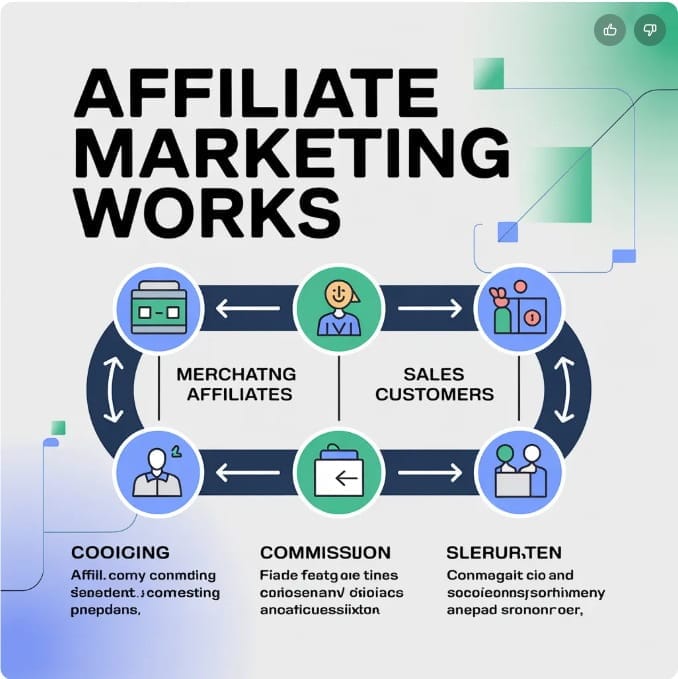
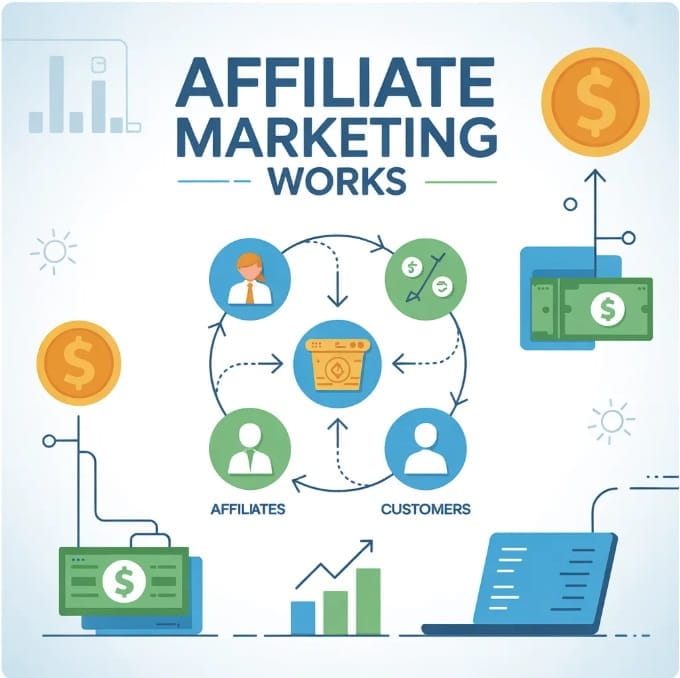
Affiliate marketing connects:
Merchants (product creators)
Affiliates (publishers)
Customers (buyers)
The affiliate acts as a digital middleman. This model works across blogs, YouTube, email marketing, and social platforms.
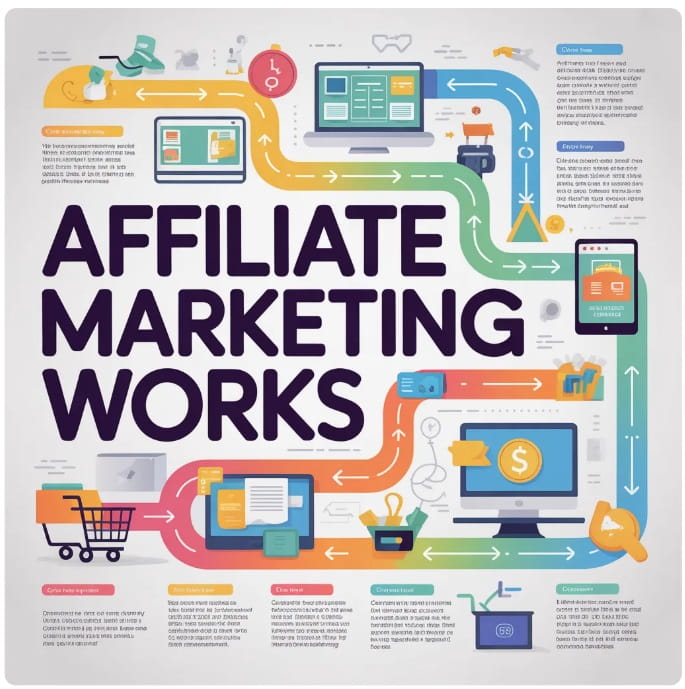
How Affiliate Marketing Works (Tracking, Links & Commissions)
Many beginners search: affiliate marketing how does it work or how affiliate marketing works
Here’s the breakdown.
When you join affiliate marketing programs, you receive a unique tracking link. When someone clicks it:
A cookie or session is recorded.
If they purchase within the attribution window, you earn a commission.
The merchant pays you based on agreed terms.
Commission structures vary:
Percentage of sale
Flat fee per conversion
Lead-based payment
Some affiliate programs high commission options can pay 30%, 50%, or even more. Others, like Amazon affiliate marketing, typically offer smaller percentages but high trust and conversion rates.
Your Role as the Digital Middleman
Your job in affiliate marketing is not to aggressively sell. It’s to:
Research your audience
Recommend relevant solutions
Provide honest reviews and tutorials
Trust determines long-term success. Without it, conversions drop.
This is why affiliate marketing examples often show educational content rather than aggressive sales pitches.
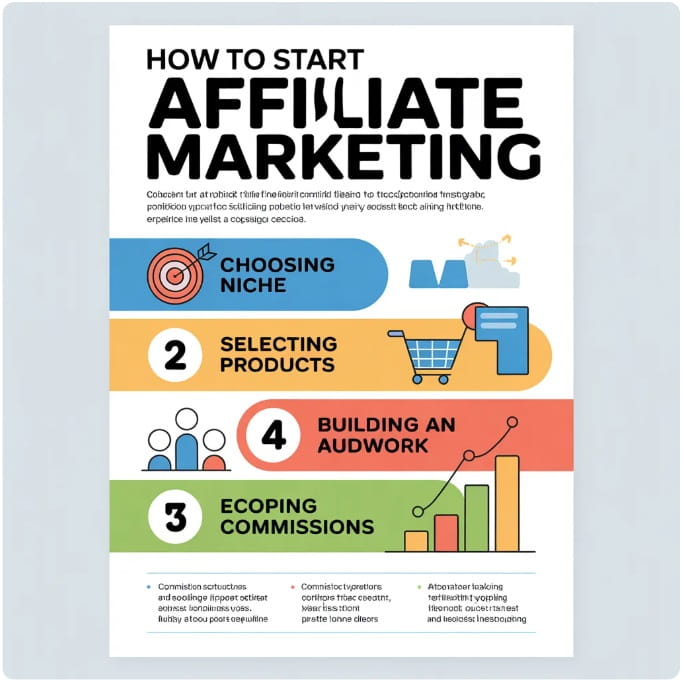
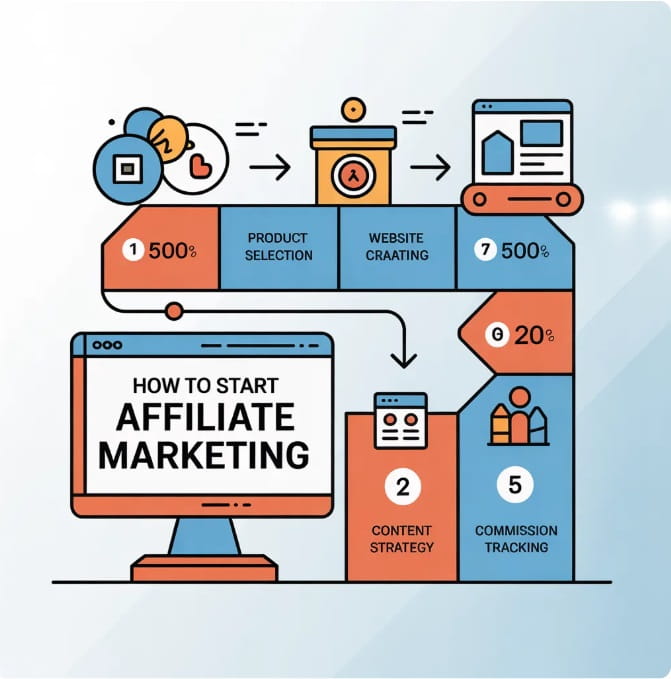
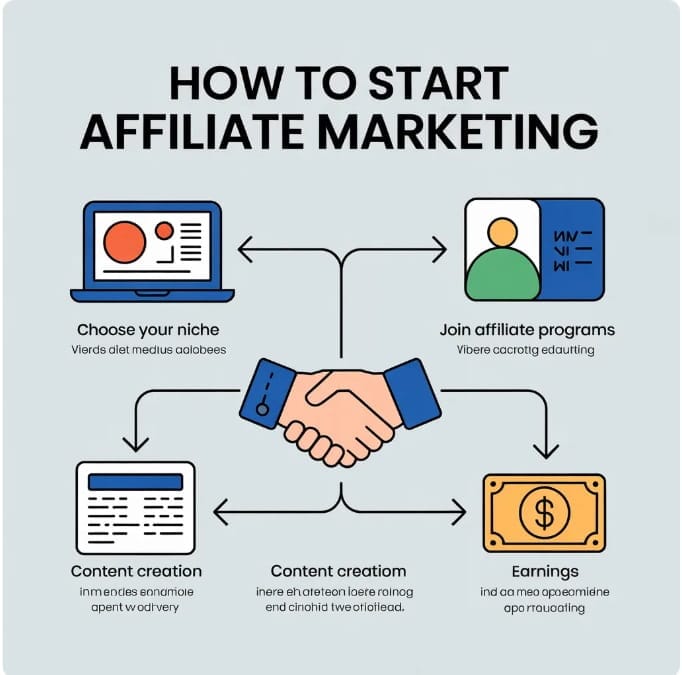
How to Start Affiliate Marketing (Step-by-Step)
Many people ask:
how to start affiliate marketing
how to start affiliate marketing for free
affiliate marketing for beginners
Let’s simplify the process.
Choose a Focused Niche
Narrowing your focus reduces competition and builds authority faster.
Examples:
Personal finance
Fitness gear
Productivity software
AI tools
Smaller niches are ideal for affiliate marketing for beginners.
Build a Platform You Control
While social media helps, owning a website and email list gives long-term stability.
A website is the backbone of serious affiliate marketing. It allows SEO traffic, structured content, and higher conversions.
Join Affiliate Marketing Networks & Programs
You can apply through:
Direct merchant programs
Affiliate marketing networks
An affiliate marketing marketplace
Examples include:
Amazon (for amazon affiliate marketing)
High-ticket software platforms
Specialized ai affiliate programs
Keep a spreadsheet of:
Commission rates
Cookie duration
Payment thresholds
Create High-Quality Content
Content drives revenue.
Common high-performing formats:
Reviews
Tutorials
Comparisons
Case studies
Include pros and cons. Add screenshots. Be transparent.
These are foundational skills taught in any solid affiliate marketing course or affiliate marketing training program.
Drive Targeted Traffic
Traffic sources include:
SEO
Social media
Email marketing
Paid ads
SEO is especially powerful for long-term passive traffic. Diversifying reduces risk.
Types of Affiliate Marketing Opportunities
There are multiple models within affiliate marketing:
Low-Ticket Programs
Smaller commissions but easier conversions (e.g., Amazon).
High Ticket Affiliate Marketing
High ticket affiliate marketing involves promoting premium products ($500–$5,000+). Fewer sales are needed to generate significant income.
You can also look for:
High ticket affiliate programs
Affiliate programs high commission
These often exist in software, coaching, and B2B industries.
AI Affiliate Marketing: The Emerging Trend
A growing niche is ai affiliate marketing.
This includes:
Promoting AI tools
Joining ai affiliate programs
Creating tutorials around automation software
AI software often offers recurring commissions, making it attractive for scaling predictable income.
Affiliate Marketing vs Digital Marketing
Many beginners confuse the two.
Affiliate marketing vs digital marketing comparison:
Digital marketing = broader field (SEO, ads, branding, email)
Affiliate marketing = specific monetization model within digital marketing
Affiliate marketing uses digital marketing tactics but focuses on commission-based revenue.
Affiliate Marketing Tools You Need
Success depends on the right stack of affiliate marketing tools:
Website hosting & CMS
Keyword research software
Email marketing platform
Analytics tools
Link tracking tools
Serious affiliates treat this like a business.
Advantages of Affiliate Marketing
Why do so many people start?
Low Startup Cost
You don’t need inventory or manufacturing.
Flexibility
Work from anywhere.
Scalability
Content can continue earning long after publication.
Passive Income Potential
Evergreen content can generate ongoing commissions.
Risks and Limitations
But let’s stay realistic.
Income is not guaranteed.
Algorithms change.
Commission structures shift.
High competition in popular niches.
That’s why diversification matters.
Top 10 Affiliate Marketing Websites (Examples to Study)
If you’re researching the top 10 affiliate marketing websites, study:
Authority niche blogs
Review comparison sites
YouTube review channels
Software comparison platforms
Look at how they structure content and calls to action.
Is Affiliate Marketing Worth It?
A common question is:
is affiliate marketing worth it
Short answer: Yes — if approached seriously.
Treat it like a business, not a side hobby.
Successful affiliates:
Track metrics
Test offers
Improve conversion rates
Diversify revenue streams
Realistic Timeline & Expectations
Expect:
3–6 months for initial traction
12+ months for consistent income
18–24 months for full-time replacement potential
This depends on:
Niche difficulty
Content quality
Traffic strategy
Consistency
Can You Make a Full-Time Living?
Yes. But it requires:
Business mindset
Content consistency
Strategic promotion
Diversification
Many successful affiliates combine:
Affiliate commissions
Sponsored content
Display ads
Digital products
Actionable Checklist to Get Started
Choose a niche.
Research affiliate marketing programs.
Build a website.
Create 3 cornerstone articles.
Implement basic SEO.
Start email capture.
Promote consistently.
Track results.
Diversify income.
If you’re completely new, consider structured affiliate marketing training or a reputable affiliate marketing course to shorten the learning curve.
Final Thoughts
Affiliate marketing remains one of the most flexible online income models available. Whether you’re exploring affiliate marketing for beginners, researching what is affiliate marketing, or comparing high ticket affiliate marketing strategies, the core remains the same:
Help people make better purchasing decisions.
With steady effort, useful content, and diversified traffic, affiliate marketing can grow from a side project into a meaningful income stream.
Start small. Publish consistently. Improve based on data.